Ask two people what a firm mattress feels like, and you will get two different answers. One means supportive. The other means uncomfortable. The word does a lot of work and defines almost nothing on its own.
That vagueness is why so many people buy the wrong feel. Firmness is not a mark of quality, and it is not the same as support, and once those two ideas come apart, choosing gets much easier. A good mattress firmness guide explains what the scale actually measures and how to find the number that suits your body.
What mattress firmness actually measures
Firmness describes one thing: how hard or soft the surface feels the moment you lie down. The rating is a sensation, not a judgment of how good the mattress is.
The distinction that matters most is between firmness and support. Firmness is the feel on the surface. Support is whether the mattress keeps your spine in a neutral line underneath. A soft mattress can still support you well, and a very hard one can support you badly by leaving a gap under your waist. Keeping the two separate is the whole trick to reading firmness sensibly.
The firmness scale, from soft to firm
Most brands describe firmness on a scale of one to ten, where one is barely there, and ten is close to a board. In practice, almost every mattress sold sits between three and nine, and the useful language is the words, not the numbers.
Soft, roughly three to four
A soft surface lets your shoulders and hips sink in and cradles pressure points closely. Soft suits lighter sleepers and dedicated side sleepers, though it can let heavier bodies sink too far and lose spinal alignment.
Medium and medium-firm, roughly five to seven
Most sleepers land in this band, balancing enough give for pressure relief with enough push-back to hold the spine level. Medium-firm is the safest starting point if you are unsure, and it flexes to cover a range of positions and body types.
Firm, roughly eight to nine
A firm surface offers minimal sink and maximum support, keeping the body on a flat plane. Firm suits many back and front sleepers and heavier bodies, but pushed too far, it stops cushioning the shoulder and hip and creates pressure of its own.
How to find your firmness by position and weight
Your ideal firmness is set mostly by two things: how you sleep and how much you weigh. Neither is about preference alone.
Sleeping position
Side sleepers usually want the softer end, so the shoulder and hip can sink while the waist stays supported. Back sleepers do well in the medium-firm middle. Front sleepers need firmer support, since any sink at the stomach pulls the lower back into an arch.
Body weight
Weight changes how firm a mattress feels. A heavier sleeper compresses the surface more and experiences a given mattress as softer, so they often need a firmer build to reach the same alignment a lighter sleeper gets from medium. Thickness follows body weight for the same reason, with sleepers under 90 kg generally suited to a 6-inch and those above 90 kg to an 8-inch.
Why the same number feels different on different materials
Two mattresses can share a firmness rating and still feel nothing alike, because the material decides how the surface responds under you. A scale stops telling the whole story here.
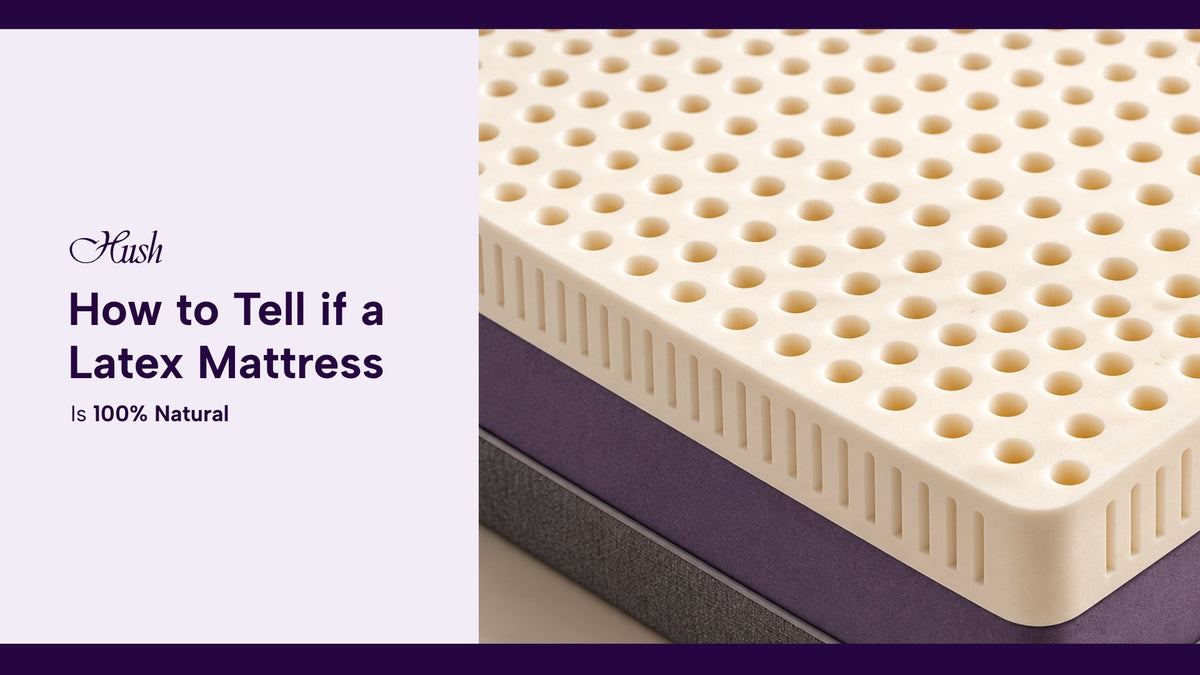
100% natural latex is responsive. The material gives under pressure and springs back, so a medium-firm latex surface supports the hips while still relieving the shoulder. Memory foam at the same rating sinks slowly and holds the shape, a very different sensation. When you compare firmness, compare it within the same material, and remember that the naturally cooling, responsive feel of 100% natural latex changes the experience as much as the number does.
Matching firmness to how you sleep
Decide your position and weight first; treat medium-firm as the safe default if you are between two levels, then give the mattress long enough to judge. Hush builds a responsive medium-firm all-rounder on a 100% natural latex comfort layer that supports without trapping heat, with the firmest option in the range for sleepers who want more support underneath.
See both firmness levels together, then use a year-long trial across seasons to be certain.
Frequently asked questions
What does mattress firmness mean?
Firmness describes how hard or soft a mattress feels when you lie on it, rated on a rough scale of one to ten. Firmness is a surface sensation, not a measure of quality or of how well the mattress supports your spine.
What is the difference between firmness and support?
Firmness is the surface feel, while support is whether the mattress keeps your spine in a neutral line. A soft mattress can support well, and a very firm one can support poorly, so the two are not the same thing.
What firmness is best for back pain?
Most people with back discomfort do well in the medium-firm to firm range, which supports the spine without leaving a gap under the lower back. The exact level depends on your sleeping position and weight, and ongoing pain is worth discussing with a clinician.
Is a firmer mattress always better?
No. A very firm surface supports the spine but can stop cushioning the shoulder and hip, creating pressure of its own. Medium-firm suits the widest range of sleepers, which is why it is the safest default.
How does body weight affect mattress firmness?
Heavier sleepers compress a mattress more, so they feel a given surface as softer and often need a firmer build for proper alignment. Lighter sleepers experience the same mattress as firmer and may prefer a softer one.
Does firmness feel the same on every material?
No. The same firmness rating feels different across materials, since 100% natural latex springs back while memory foam sinks slowly. Always compare firmness within the same material rather than across types.